
EN
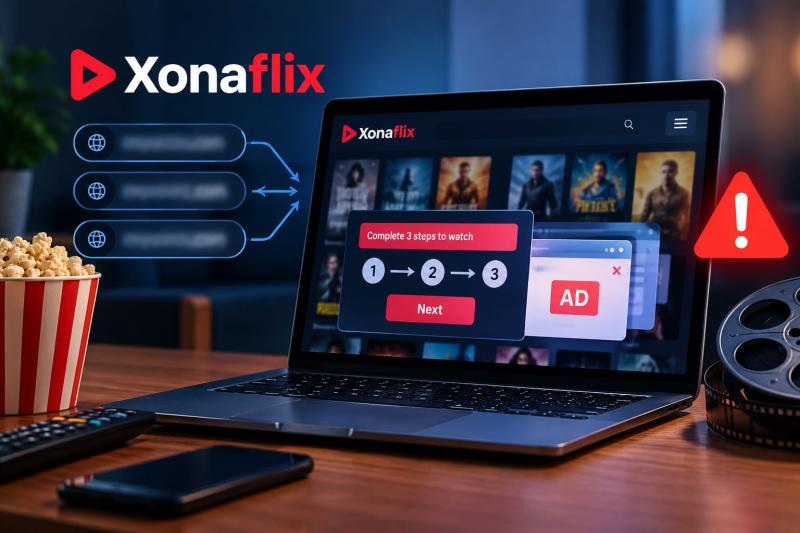
Xonaflix is an online media directory that has recently emerged within the digital streaming ecosystem, drawing attention from audiences seeking free entertainment options. Publicly available registration records show that this network functions across multiple web nodes, most notably utilizing the Xonaflix.fr, Xonaflix.space, and Xonaflix.online domains.
The relationship between these addresses reveals a structured domain-routing network. While Xonaflix.online serves as an initial hub that points users directly to Xonaflix.space via an explicit gateway button, Xonaflix.fr functions as a redirection mechanism that currently sends visitors straight to the Xonaflix.space streaming dashboard. Because casual viewers frequently look to these platforms to bypass standard paywalls, assessing their structural transparency and potential browsing vulnerabilities is essential for user safety.
Evaluating the entertainment catalog hosted on Xonaflix.space reveals significant insights into the platform's content procurement methods. Community reviews indicate that a significant portion of newly debuted films consists of theater-recorded versions, widely classified as CAM prints.
These video files typically display distinct technical limitations, including off-angle camera perspectives, blurred resolutions, and trapezoidal screen distortions resulting from handheld recording.
Furthermore, these streams frequently contain embedded promotional overlays and digital watermarks from unregulated offshore sports betting brands or cryptocurrency trading systems. While these files may serve as an immediate alternative for budget-conscious viewers, the visual and auditory standard may fall short of the high definition quality guaranteed by authorized network channels.
A central operational attribute of the Xonaflix.space platform is its reliance on a highly structured, mandatory ad wall to monetize video traffic. Before users are permitted to stream any film or episode, the interface displays a persistent prompt stating that they must navigate through a three-step advertising zone.
Interacting with this setup, specifically clicking the "Next (1/3)" and subsequent progress buttons, forces open multiple aggressive, unrequested browser windows. Public logs reveal these clickunder scripts route users through third party optimization domains before landing on various high risk promotion or betting dashboards. Only after clicking through all three distinct advertising loops does the system unlock the media player stream.
While designed to fund site maintenance, these forced multi-window pathways can expose browsers to unverified third-party scripts.
The backend configuration and operational trends observed across the Xonaflix.online network closely match patterns found throughout the broader unauthorized streaming market. The specific interface templates, hidden pop-under triggers, and domain mirroring strategies closely resemble the operational patterns discussed in public analysis of unauthorized streaming platforms such as GummyFlix, StreamGuin, and so on.
Additionally, the systematic deployment of rolling alternative domain extensions to maintain network uptime reflects a common structural model detailed in industry safety reports. These shared technical commonalities suggest that multiple front-end brands may be managed by interconnected operator groups utilizing mirrored script architectures to capture ad revenue.
Cybersecurity evaluations of platform frameworks matching Xonaflix.fr and Xonaflix.space point to several systemic operational liabilities:
Navigational Drift:
The aggressive deployment of script-based clickover layers can automatically push users toward third-party domains that solicit personal details or financial profiles.
Infrastructure Instability:
The distribution of traffic across extensions like Xonaflix.online indicates that the platform's hosting architecture may undergo rapid domain shifts to avoid technical flags.
Malicious Script Exposure:
Interacting with unvetted media players or attempting to close persistent advertising frames can occasionally prompt involuntary background downloads on consumer hardware.
The presence of theatrical theater-recorded CAM prints on Xonaflix.space strongly implies that the media directory distributes files without obtaining proper studio distribution rights. Under prevailing international copyright frameworks, the unauthorized reproduction, hosting, or transmission of protected creative properties constitutes intellectual property infringement.
For the end-user, streaming unlicensed video content may present distinct compliance risks depending on local national laws. While enforcement actions typically prioritize site operators, viewers utilizing unauthorized streams in certain jurisdictions could face formal copyright warning flags, account suspensions from their Internet Service Providers (ISPs), or regulatory penalties.
Pros:
Cons:
Ultimately, analyzing the Xonaflix.fr, Xonaflix.space, and Xonaflix.online portals requires balancing immediate media access against distinct technical vulnerabilities. While the network may function as a temporary solution for budget-driven consumers, the aggressive monetization methods, copyright legal issues surrounding theater-recorded CAM prints, and unverified data pathways present clear operational risks.
Security specialists generally recommend using advanced ad-blocking software, keeping device malware scanners active, or moving toward officially recognized distribution channels to protect local hardware. Individuals who choose to browse these specific locations should remain highly cautious regarding copyright compliance rules, the risks associated with cam recorded prints, or any unexpected external pop-ups and download prompts.
This safety assessment serves exclusively as an educational resource for digital consumers and relies solely on open-source intelligence, publicly documented network traits, and general web protection standards. The descriptions provided herein explore potential operational risks rather than stating absolute confirmations or binding legal conclusions regarding the internal management, legitimacy, or intent of the reviewed portals. The choice to interact with any unverified digital framework rests entirely with the individual reader, who is encouraged to practice comprehensive digital security screening measures independently.
This article has been written by a Scam Fighter Contributor, De-Reviews.com Team. If you believe the article above contains inaccuracies or needs to include relevant information, please contact ScamAdviser.com using this form.
De-Reviews.com Team is a group of scam researchers, editors, and online safety advocates dedicated to exposing online fraud and helping consumers stay safe online. The team has been investigating scams, fraudulent websites, phishing campaigns, and other online threats since 2014. Read the Full Author Profile.
