
EN
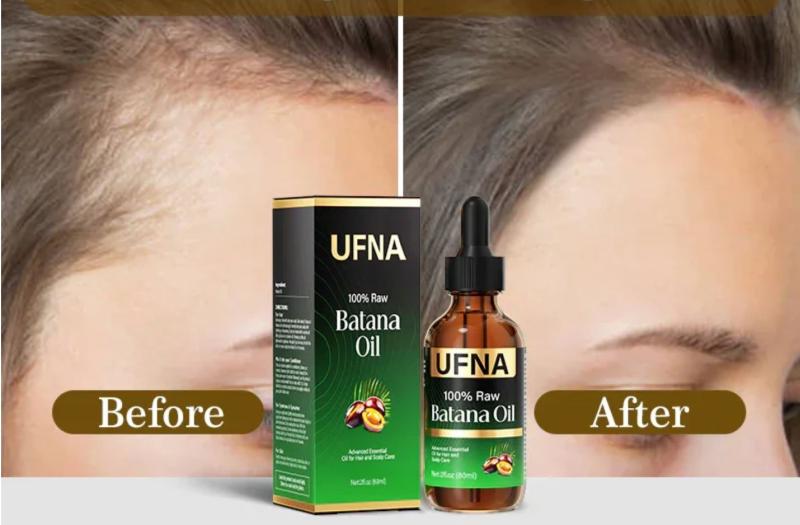
The search for effective hair loss treatment and hair growth oil options frequently trends online, with UFNA Batana Oil appearing as one of the brand names in the hair care market. Independent content creators on social media are posting dramatic before-and-after transformations showcasing what is presented as rapid hair regrowth, a healthy scalp, and a solution for thinning hair using UFNA Batana Oil.
But does the available science align with this online presentation? This UFNA Batana Oil review examines the product specifications, potential cosmetic applications, and key consumer observations to facilitate an informed purchasing decision.
As per publicly available information, historically, traditional Batana oil originates from the nuts of the American palm tree (Elaeis oleifera), native to regions within Central and South America, particularly Honduras. Indigenous communities have reportedly used unrefined variations for generations as a topical conditioning treatment.
The UFNA Batana Oil product distributions found online may vary depending on the specific storefront:
The Standalone Batana Oil Bottle:
Commonly sold individually across various e-commerce platforms, this item is marketed as a raw topical formulation intended for scalp application and hair massage.
The Optional Combination Kits:
Certain online packages may bundle the main oil bottle with a secondary hair growth spray utilizing common cosmetic additives like Biotin, Ginseng Extract, and Rosemary Oil.
To evaluate how this UFNA Batana Oil might fit into a daily routine, it helps to distinguish between potential superficial conditioning benefits and unverified biological outcomes.
Potential Surface Conditioning:
Plan derived oils are widely believed to behave as emollients. Applying such formulations may coat the hair shaft, which could temporarily help seal in moisture and smooth the external cuticle texture.
Possible Reduction in Mechanical Breakage:
By adding lubrication to dry, coarse, or heat damaged strands, topical oils may help minimize friction. If hair breaks less at the ends, users might experience better length retention, which can create the cosmetic illusion of faster or thicker growth.
Possible Benefits from Scalp Massage:
The product instructions advise a 2-minute manual scalp massage. Many specialists indicate that the physical act of massaging a scalp may temporarily enhance local blood circulation, a process that is independently thought to support general hair health.
Common Cosmetic Ingredients on UFNA Batana Oil:
The accompanying spray sold by some storefronts as a kit bundle integrates additives like Rosemary Oil and Biotin, which are routinely incorporated into over the counter hair care items and may offer mild temporary support for strand resilience.
Absence of Clinical Validation of UFNA Batana Oil for Hair Loss:
There appears to be a total lack of peer-reviewed clinical research or randomized controlled human trials demonstrating that topical Batana oil can reverse hair loss, stimulate dormant hair follicles, or treat conditions like alopecia.
Unlikely to Affect Hormonal Thinning:
Available data does not show that topical botanical oils can successfully intercept internal genetic or hormonal hair thinning mechanisms, such as male or female pattern baldness.
Likely Temporary Cosmetic Effects:
The moisturizing properties associated with plant oils typically last only during active, consistent usage. These products seem to alter the temporary appearance and texture of existing hair rather than modifying the biological cycle of hair production.
A close analysis of the product details and distribution methods reveals several specific elements that consumers may want to evaluate carefully before making a purchase:
The product details as provided on sales page for the UFNA Batana Oil variant state "Made in China". Authentic, raw Batana oil historically originates from Central American palm trees. This geographic distinction suggests that the liquid may be an engineered cosmetic blend produced to simulate the properties of traditional Batana oil, rather than pure, unrefined oil sourced directly from Honduran agricultural cooperatives.
The product specifications describe the kit as a drug free, cosmetic grade formula. It is not registered as a medicinal hair restoration drug. This classification indicates that the components are intended for superficial hair conditioning rather than biological hair follicle treatment.
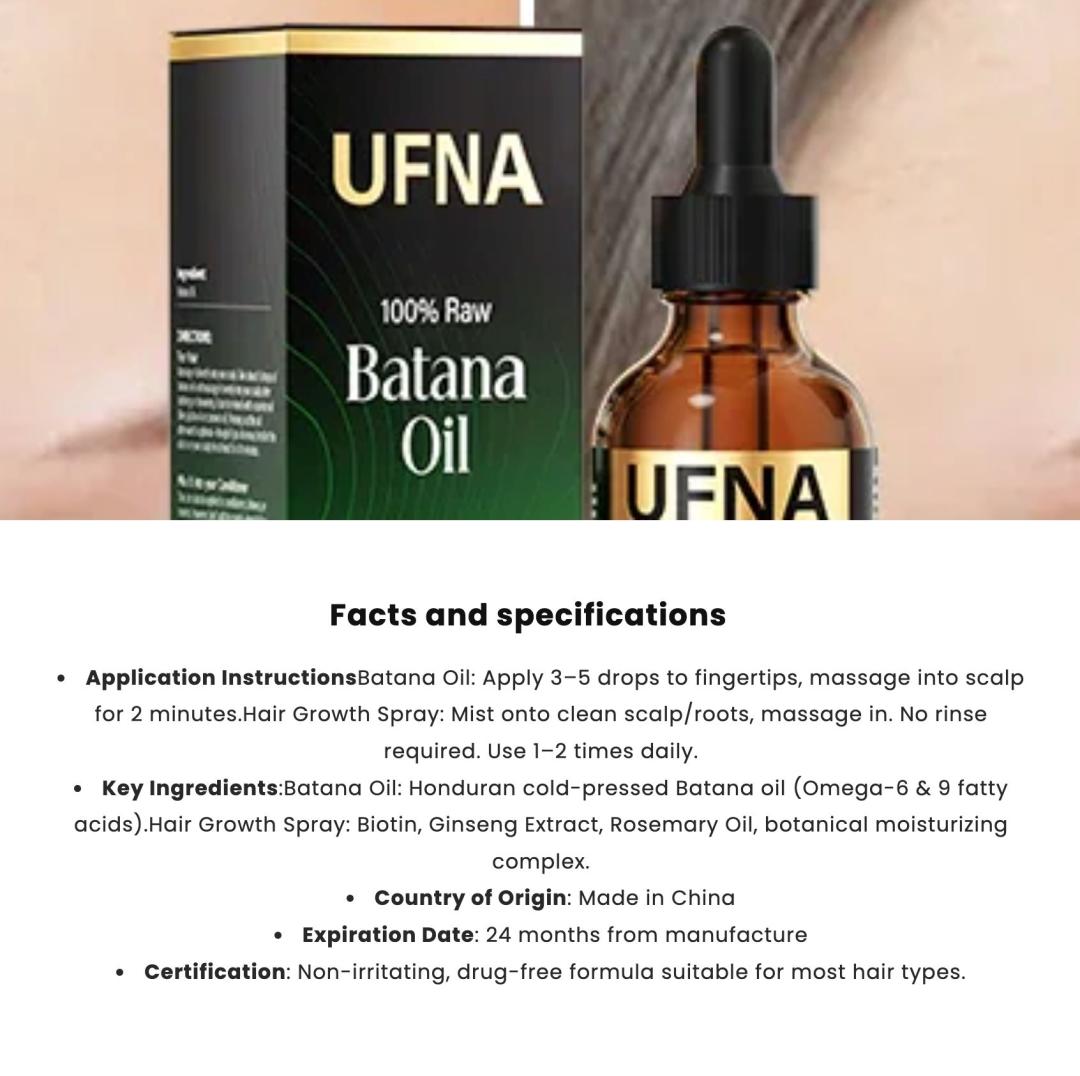
The sales page mentioned the UFNA Batana Oil component as "Honduran cold pressed Batana oil," but does not provide publicly disclosed laboratory analyses, purity grades, or exact batch metrics. Because the documentation concurrently notes the geographic origin as a cosmetic manufacture in China, the absence of independent verification reports makes it difficult for consumers to confirm the precise processing standards or pure content percentages of the oil itself.
UFNA Batana Oil seems to operate through an e-commerce private label or white-label supply chain model. The brand itself does not appear to maintain independent research laboratories or dedicated manufacturing centers. Instead, it likely sources pre-formulated batches from mass cosmetics producers and markets them under its own logo.
The dramatic visual transformations shared by online accounts may not represent typical consumer outcomes. Many creators utilize integrated affiliate storefront links, meaning they may receive a direct financial commission on sales driven by their videos.
Furthermore, professional presentation techniques, such as moving from direct overhead lighting to diffused ring lights, applying temporary colored scalp powders, or transitioning from wet, clumped hair to a dry, blow-dried style, frequently seem to exaggerate the visual contrast between the "before" and "after" segments.
UFNA Batana Oil may be best evaluated as a standard cosmetic conditioner rather than a therapeutic treatment for hair loss.
For consumers seeking an oil-based product to assist with frizz control, soften coarse textures, or potentially safeguard brittle ends from combing damage, the oil formulation seems to provide acceptable moisturizing attributes. However, for individuals purchasing the UFNA Batana Oil with the expectation of resolving active hair thinning, bald spots, or medical scalp disorders, the marketing narratives do not appear to align with documented clinical science.
If combating hair loss is the primary goal, consumers are consistently advised to bypass social media trends and consult a board-certified dermatologist for a formal medical assessment.
This article is an objective review intended strictly for educational, informational, and critical commentary purposes. The analysis, observations, and data points expressed herein are based on an independent evaluation of publicly available online marketing materials, physical product labeling, public storefront ingredient listings, and third-party consumer feedback platforms at the time of writing. Because online marketing assets and digital storefronts can change without notice, all observations reflect data accessible at the time of publication.
This review provides a neutral analysis of documented consumer inconsistencies and does not make definitive accusations regarding the baseline legality of the business entities involved. The author shall not be held liable for any direct or indirect actions taken by readers based on this text. Individual user experiences may vary based on personal circumstances, and the presence of active online storefronts is noted without endorsing or condemning their commercial practices. This commentary does not promote or condemn the product; rather, it encourages consumers to carefully evaluate marketing claims, ingredient profiles, and digital transparency before making an autonomous purchase decision.
All product names, logos, and trademarks (including "UFNA Batana Oil" or "Batana") are the sole property of their respective owners and are utilized here exclusively under fair use guidelines for descriptive, educational, and identification purposes. This content does not constitute professional medical advice, diagnosis, or treatment. Always consult a licensed healthcare professional or physician before introducing any new dietary components or topical hair treatments to your routine.
This article has been written by a Scam Fighter Contributor, De-Reviews.com Team. If you believe the article above contains inaccuracies or needs to include relevant information, please contact ScamAdviser.com using this form.
De-Reviews.com Team is a group of scam researchers, editors, and online safety advocates dedicated to exposing online fraud and helping consumers stay safe online. The team has been investigating scams, fraudulent websites, phishing campaigns, and other online threats since 2014. Read the Full Author Profile.
