
EN
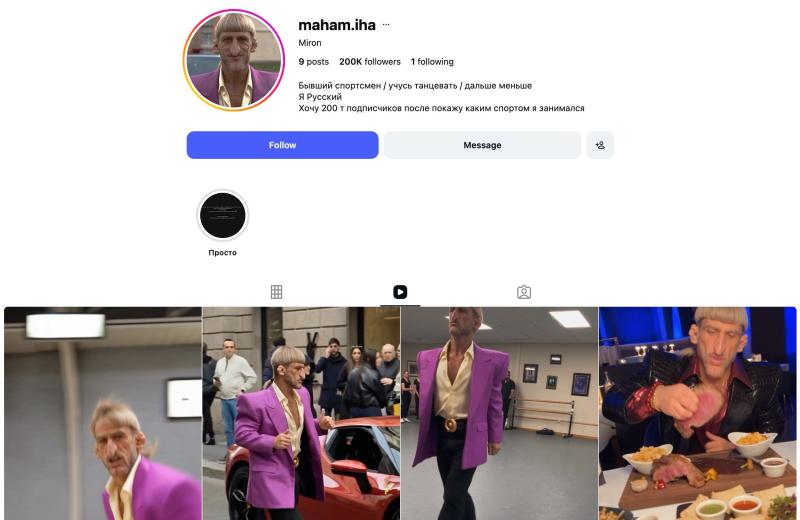
Recently, a new social media creator named Maham Iha has taken the internet by storm, sparking an intense debate across mobile video feeds. His short lifestyle clips, dancing videos, and fashion updates have quickly generated millions of views and massive engagement.
Yet, as his follower count exploded, thousands of viewers noticed subtle details in his clips that seemed unusual, leading to a viral question that has divided audiences: Who exactly is Maham Iha, and is he actually a real human being or AI-generated character?
To anyone scrolling through social media, Maham Iha appears to be an overnight success story in the world of high fashion and luxury lifestyle entertainment. His profiles present him as an eccentric, high energy creator sporting a very distinctive blonde bowl-cut hairstyle and dressed in eye-catching, custom-tailored purple blazers.
His videos stand out because they showcase him walking like a runway model outside luxury hotel lobbies, performing synchronized dance moves in designer clothing, and stepping out of high-end vehicles, all set to popular viral music tracks.
Because the clips look so highly polished and pull in massive view counts, with single videos regularly drawing anywhere from 6 million to over 23 million views, many viewers initially believe he is a real-world avant-garde fashion model building a digital fanbase.
However, the mystery surrounding his true identity continues to deepen as people try to look up his modeling agency history, past fashion show appearances, or public interviews, only to find that his entire public footprint exists purely within a specific loop of social media feeds.
To understand why this profile has sparked so much discussion, it helps to look at the advanced digital production methods that seem to have been used to build the persona. Rather than a traditional video of a single real world performer, the identity appears to be built by layering multiple media elements together using software tools:
The physical look and unique facial features of Maham Iha seem to belong to no one in the real world. His face appears as though it could have been built from scratch using modern text-to-video and text-to-image AI models. These computer programs can take specific physical descriptions and turn them into highly realistic digital faces.
A key technical detail is that his signature facial structure and blonde bowl cut stay remarkably consistent even when his outfits, backgrounds, and modeling environments change dramatically.
To make the character move naturally in fashion snapshots or while performing on camera, the creators may not have animated his movements from scratch. Instead, it looks like they might have used video templates and body images of real human fitness models or runway performers. They could then have used advanced tracking software to seamlessly map the artificial digital face over the real body double.
While the videos look incredibly smooth at a quick glance, they often display a glossy, hyper-stylized texture common in high-end generative media. Closer inspection sometimes reveals subtle digital tells, such as minor inconsistencies in clothing textures or background lighting physics, which suggest an algorithmic production process rather than physical video cameras.
The primary destination for this virtual character's content is the Instagram platform, where the identity has generated substantial engagement. Viewers can check the account's visual feed and follow the ongoing public conversations by visiting the Instagram profile handle at @maham.iha.
On the platform, single video clips routinely attract hundreds of thousands of views and vibrant comment sections. Interestingly, within these community spaces, many internet users openly discuss the digital nature of the character, frequently referring to the persona with popular phrases like the "No. 1 AI" influencer.
As the character achieved viral reach, search trends began linking the name "Maham Iha" to various cryptocurrency tokens and meme coin listings online. This has led to speculation about whether the profile represents a real-world financial project or a digital currency launch. However, looking closely at how decentralized finance works provides a clear explanation for this connection:
Because the character is a digital virtual entity, the persona itself does not possess the human capacity or official legal standing to launch or manage a financial asset. Instead, it appears that independent, third party operators are using the viral name and distinctive likeness of Maham Iha to launch speculative tokens.
It is a common trend for anonymous developers to quickly create cryptocurrency tokens named after whatever is currently trending on social media. By naming a token after a popular online character or copying a signature theme like his purple suit, these creators attempt to attract speculative interest from buyers who recognize the trend.
There is currently no verifiable evidence, official financial whitepaper, or secure blockchain documentation that connects the actual operators of the Maham Iha Instagram page to any cryptocurrency token. The token listings appear to be an entirely separate, external market reaction capitalizing on the character's internet fame.
In summary, the persona known as Maham Iha appears to be an AI-generated digital character rather than a living human influencer. He functions as a beautifully engineered virtual model, showcasing how advanced text-to-video software can build a consistent, highly engaging persona from scratch.
Furthermore, the appearance of cryptocurrency tokens using his name highlights how quickly modern digital trends can be adopted by external operators. When navigating digital spaces, Maham Iha stands out as an excellent example of the blurring lines between real-world creators and fully simulated internet personalities.
Image Source: Screenshot taken from the Instagram profile of Maham Iha to show his profile interface.
The information presented in this article is compiled for educational, journalistic, and general informational purposes only. The descriptions of technology tools, production methods, and account histories are based on public observations, active social media status indicators, and documented digital media trends
This article operates strictly as a neutral report; it neither condemns nor promotes the profile, the creative usage of automated technology, or any associated third-party digital financial assets. Mention of any platform handles, external creative works, or public identities does not imply an assertion of legal fault, official corporate affiliation, or financial endorsement on the part of the authors. Digital media statuses change rapidly, and readers are encouraged to perform independent research.
This article has been written by a Scam Fighter Contributor, De-Reviews.com Team. If you believe the article above contains inaccuracies or needs to include relevant information, please contact ScamAdviser.com using this form.
De-Reviews.com Team is a group of scam researchers, editors, and online safety advocates dedicated to exposing online fraud and helping consumers stay safe online. The team has been investigating scams, fraudulent websites, phishing campaigns, and other online threats since 2014. Read the Full Author Profile.
