
EN
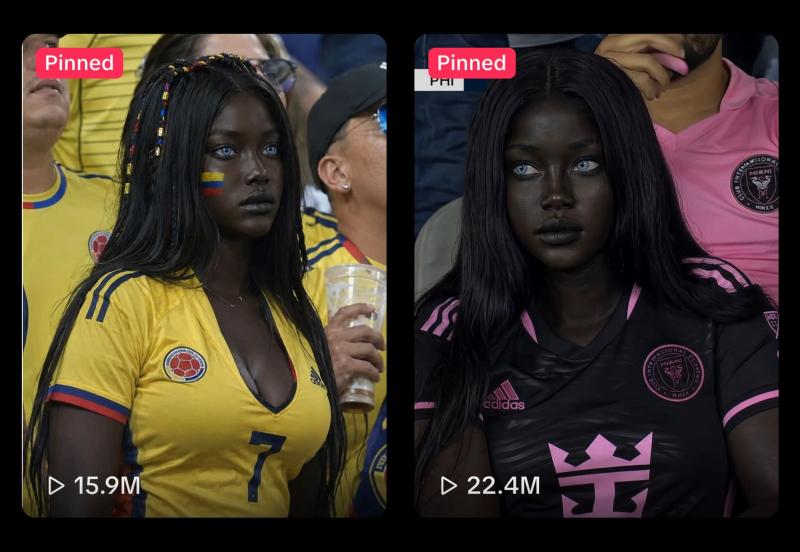
A personality known as Zoe Cole (often seen as @zoe.colefr) has recently attracted significant attention across social media. Videos showing her cheering at football matches and appearing like a football fan/influencer have been viewed by thousands of people. Initially, the content looks convincing, leading many viewers to believe she is a real person.
However, after examining publicly available videos and online discussions, there are several reasons to believe that Zoe Cole is likely to be an AI-generated virtual character rather than a real human influencer.
One of the reasons Zoe Cole attracted attention is because her content presents her as a passionate football fan attending stadium events. The videos are structured similarly to content shared by real sports influencers, including match-day reactions, crowd scenes, and fan experiences.
This type of content format makes virtual characters more difficult to distinguish from real individuals because it follows familiar social media patterns. The combination of realistic environments, emotional reactions, and sports related content creates an appearance similar to traditional influencer videos.
The videos are designed to look highly realistic, but viewers and digital analysts have pointed out a number of unusual characteristics that repeatedly appear across different clips.
Some commonly reported observations include:
These characteristics have contributed to speculation that the content may involve AI-generated elements.
Some videos also contain unusual background behavior that viewers have highlighted.
Examples include:
These types of visual artifacts are commonly associated with AI-generated videos, especially when scenes involve large crowds, moving cameras, or detailed backgrounds.
Some online investigators have also claimed that certain image versions associated with Zoe Cole contain metadata or digital markers linked to AI image-generation systems.
While such claims should always be independently verified, they have contributed to growing speculation that the character is likely to be created using generative AI technology rather than traditional photography or video production.
Virtual influencers are becoming increasingly realistic. Many are created for entertainment, marketing, or social media engagement, and some creators clearly disclose that their characters are digital.
The challenge arises when highly realistic AI-generated personalities are presented without clear disclosure. Viewers may naturally assume they are interacting with a real person, making it more difficult to distinguish authentic creators from computer generated ones. As AI technology continues to improve, these situations are likely to become more common.
If you come across an online personality that seems almost too perfect, consider looking for several signs instead of relying on a single clue:
Reviewing different visual and technical elements together can help users better evaluate the authenticity and origin of online content.
Based on publicly available videos, technical observations shared by online investigators, and the recurring visual inconsistencies seen across multiple clips, Zoe Cole appears likely to be an AI-generated virtual influencer rather than a real person.
The use of AI-generated characters does not automatically indicate any specific purpose or intention behind the content. Virtual influencers and digital characters are increasingly being used in entertainment, creative projects, and marketing campaigns. Clear disclosure about digitally created identities can help viewers better understand the nature and origin of the content they are viewing.
As AI-generated media becomes more advanced, verifying online identities will become increasingly important. Taking a moment to question unusually perfect content and checking multiple sources before accepting it as genuine can help users navigate today's rapidly evolving digital landscape.
This article has been written by a Scam Fighter Contributor, De-Reviews.com Team. If you believe the article above contains inaccuracies or needs to include relevant information, please contact ScamAdviser.com using this form.
De-Reviews.com Team is a group of scam researchers, editors, and online safety advocates dedicated to exposing online fraud and helping consumers stay safe online. The team has been investigating scams, fraudulent websites, phishing campaigns, and other online threats since 2014. Read the Full Author Profile.
