
EN
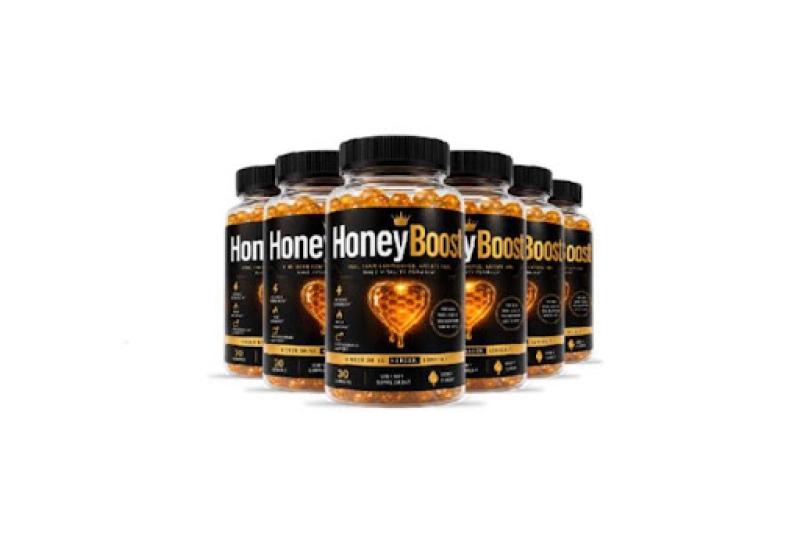
Honey Boost XL Gummies are marketed online as a male wellness supplement promising to boost energy, stamina, testosterone, and sexual performance. While gummies offer a convenient alternative to traditional pills, a closer analysis of Honey Boost XL Gummies—and the network of websites selling them—reveals significant regulatory concerns, questionable clinical claims, and widespread white-label distribution risks.
Here is what consumers need to know before buying Honey Boost XL Gummies.
Honey Boost XL Gummies are dietary supplements promoted to support male sexual health, stamina, and testosterone levels. The product is presented as a chewable gummy containing a blend of natural herbal ingredients aimed at improving male vitality. However, the brand operates as a white-label product distributed across multiple independent websites (such as myhoneyboost.com) as well as third-party marketplaces like Walmart and eBay, leading to inconsistent ingredient panels depending on which vendor you buy from.
Websites promoting Honey Boost XL Gummies carry high consumer risk due to new domain registrations, hidden WHOIS privacy details, and low independent trust scores. Primary storefronts like myhoneyboost.com hold a Scamadviser Trust Score of just 18 / 100, with technical records showing the domain was registered on July 10, 2026—making it less than two months old.
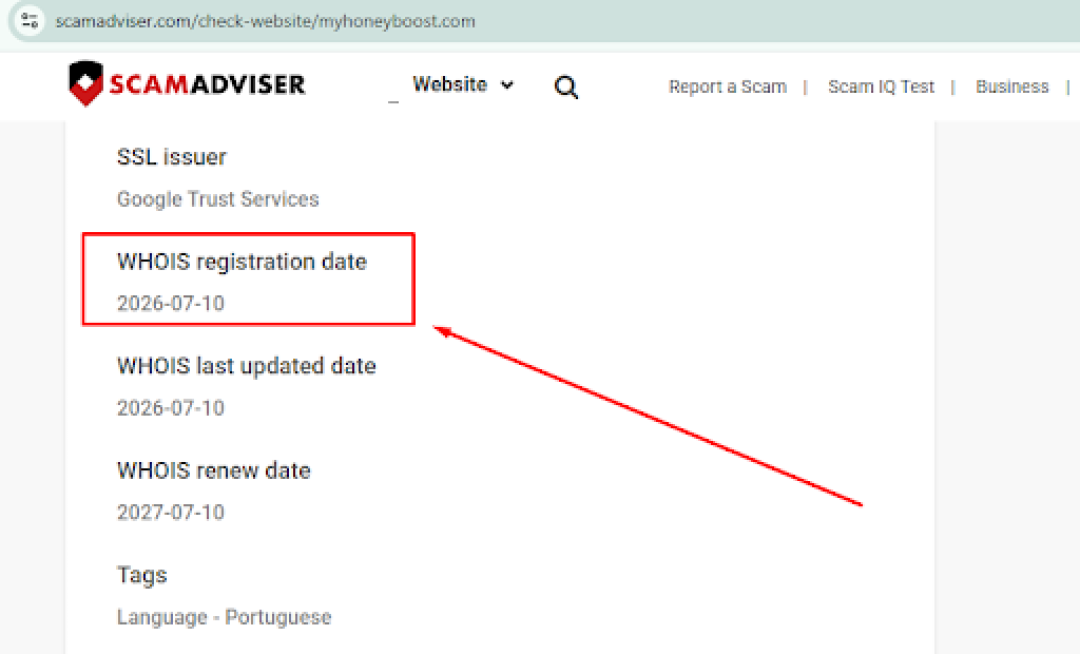
Short-lived domains using registrant privacy shields are frequently deployed by temporary affiliate networks to run high-pressure ad campaigns, collect payments, and disappear once customer complaints, chargebacks, or bad reviews begin to mount.
The high review counts displayed on official sales pages cannot be verified on independent third-party platforms. While sales pages boast over 27,800 customer reviews with near-perfect ratings, independent review platforms paint a completely different picture. For example, the Trustpilot profile for myhoneyboost.com contains only a handful of submissions, while marketplace feedback on sites like eBay attaches to individual third-party resellers rather than the product itself. When internal review counters cannot be independently validated, shoppers should treat those numbers with heavy skepticism.
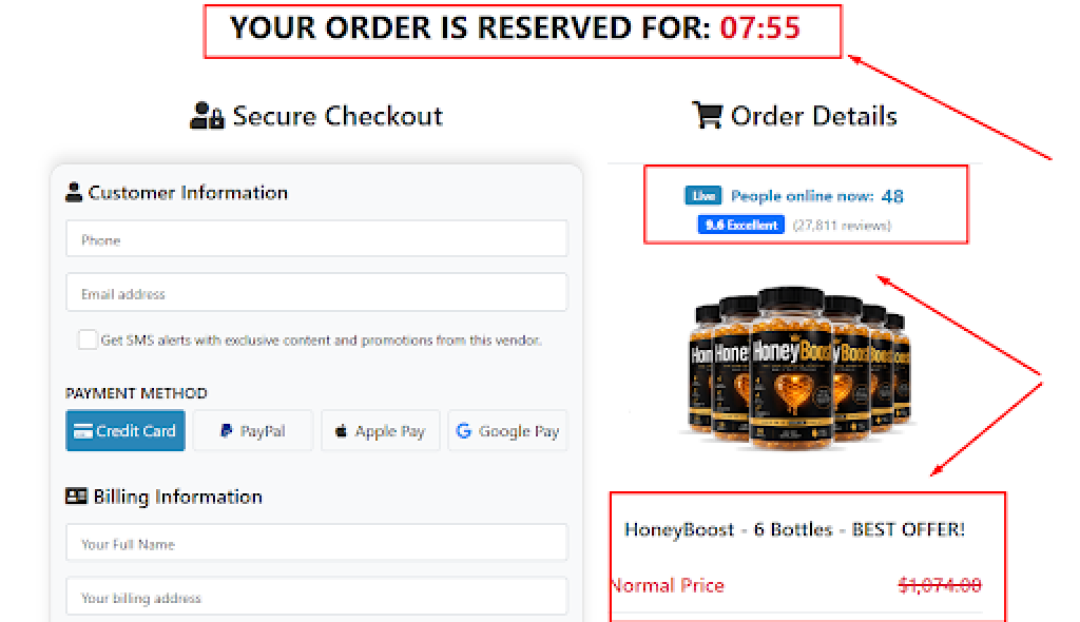
Sales pages for Honey Boost XL Gummies rely heavily on artificial urgency timers, viewer counters, and aggressive bundle discounts. Visitors to the main storefront are met with countdown timers suggesting deals will expire in minutes, alongside pop-ups showing live viewer counts. These tactics are designed to push buyers into impulse purchases before researching the product.
Billing Warning: Direct-to-consumer supplement sites frequently include small-print terms at checkout enrolling buyers in automatic recurring monthly shipments (80–100/month). Always review the billing terms before completing your order.
No strong clinical evidence proves that Honey Boost XL Gummies can reliably raise testosterone levels or treat erectile dysfunction (ED). While common formulations list ingredients like Ginseng, Maca, Tribulus terrestris, L-Arginine, and Zinc, scientific research fails to support the overall product claims:
No, Honey Boost XL Gummies are not FDA approved because the FDA does not approve dietary supplements before they enter the market. Under the Dietary Supplement Health and Education Act (DSHEA), supplement manufacturers are responsible for ensuring their own product safety and labeling compliance. Any website claiming Honey Boost XL Gummies are "FDA Approved" is making a false statement. Furthermore, advertising prescription-level medical outcomes (such as curing ED) without competent clinical proof violates Federal Trade Commission (FTC) guidelines.
Honey Boost XL Gummies are likely unproven dietary supplements wrapped in aggressive marketing, presenting a high risk for consumers. While physical bottles are usually delivered to buyers, the combination of a 18 / 100 Scamadviser Trust Score, brand-new domain registrations, unverified review counts, and unsubstantiated health claims makes purchasing from these storefronts unsafe.
This article has been written by a scam fighter volunteer. If you believe the article above contains inaccuracies or needs to include relevant information, please contact ScamAdviser.com using this form.
Adam Collins is a cybersecurity researcher at ScamAdviser who operates under a pseudonym for privacy and security. With over four years on the digital frontlines, he specialises in translating complex threats into actionable advice. His mission: exposing red flags so you can navigate the web with confidence.
