
EN
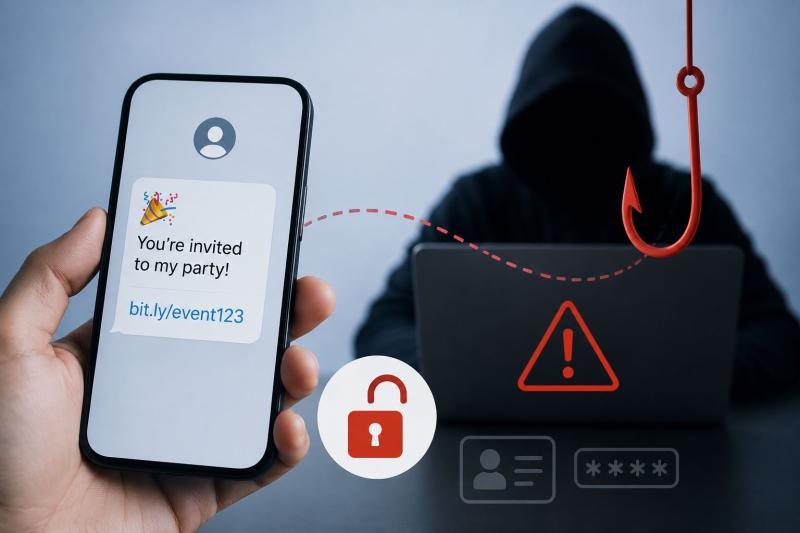
Online scams are becoming more convincing because scammers often use familiar names, social connections, and everyday situations to gain trust. One example is the "Frnds of Frnds" or "Friends of Friends" invite text message scam, where criminals pretend to send a normal event invitation but use it as a trick to steal login information.
This scam usually appears as a text message or email inviting you to a party, wedding, graduation, celebration, or another social event. Because the message may appear to come from someone you know, many people do not immediately suspect that it could be a phishing attempt.
The scam generally follows a simple but effective pattern:
The victim receives a message that looks like a digital invitation. It may say something like:
The message often includes a link to view the invitation or confirm attendance.
The main trick behind this scam is social engineering. Instead of sending a random message, scammers may use the name of a real friend, former colleague, neighbor, or someone you have interacted with before.
Seeing a familiar name can make the invitation look genuine. However, the person whose name is used may not know anything about the message. In many cases, scammers obtain names from leaked data, hacked accounts, social media profiles, or contact lists from previous victims.
After clicking the invitation link, users may be redirected to a fake webpage designed to look like a legitimate invitation service, email provider, or event platform.
The page may ask you to:
This is the dangerous part. A legitimate online invitation service normally does not require you to provide your personal email password just to view an invitation.
If you enter your information, scammers may gain access to your email or other accounts. A compromised email account can be especially valuable because criminals may use it to:
This is why these scams often spread quickly. One stolen account can become the starting point for many more phishing attempts.
Although these messages may look realistic, there are several signs that can help you identify them.
The Message Asks for Your Email Password:
This is one of the biggest warning signs. Legitimate event invitations do not normally ask guests to enter their email password to view details. If a website asks for your Gmail, Outlook, or other email password through a suspicious link, it should be treated with caution.
The Invitation Lacks Important Details:
A real invitation usually includes basic information such as:
Scam messages often hide these details and ask you to log in first before showing anything.
The Link Does Not Match the Official Website:
Before clicking any link, check the website address carefully. Scammers often create fake websites with names that look similar to real platforms. Small changes in spelling, unusual domain names, or strange website addresses can indicate a phishing page.
For example, a fake invitation website may try to imitate popular services but use a completely different domain.
The Message Creates Pressure:
Some scam invitations try to make people act quickly by saying:
Creating urgency is a common technique used by scammers to stop people from thinking carefully.
If you receive a suspicious Friends of Friends invitation message, follow these steps:
Do Not Click the Link:
If you are unsure about the invitation, avoid opening the link. Deleting the message is usually the safest option.
Contact the Person Separately:
If the invitation appears to come from someone you know, contact them using your normal phone number or social media account. Ask them directly whether they sent the invitation. Do not reply through the suspicious message because the sender account may already be compromised.
Change Your Password If You Entered Your Details:
If you clicked the link and entered your login information, change your password immediately.
It is also recommended to:
Two-factor authentication (2FA) adds an extra security layer. Even if criminals obtain your password, they may still be unable to access your account without the second verification step.
Enable 2FA especially on important accounts such as:
Reporting suspicious messages can help reduce similar attacks.
In the United States, unwanted scam texts can be forwarded to 7726 (SPAM), which helps mobile carriers investigate fraudulent messages. You can also report phishing attempts to the relevant consumer protection authorities.
To reduce your risk of falling victim to invitation scams:
Be cautious when social media contacts suddenly send unusual requests.
The Frnds of Frnds or Friends of Friends invite text message scam shows how scammers use trust and social connections to make phishing attacks more believable. A message that looks like a simple party or event invitation can actually be an attempt to steal your account credentials.
Always remember that real friends may send invitations, but they should never need your private passwords to let you attend an event.
This article has been written by a Scam Fighter Contributor, De-Reviews.com Team. If you believe the article above contains inaccuracies or needs to include relevant information, please contact ScamAdviser.com using this form.
De-Reviews.com Team is a group of scam researchers, editors, and online safety advocates dedicated to exposing online fraud and helping consumers stay safe online. The team has been investigating scams, fraudulent websites, phishing campaigns, and other online threats since 2014. Read the Full Author Profile.
