
EN
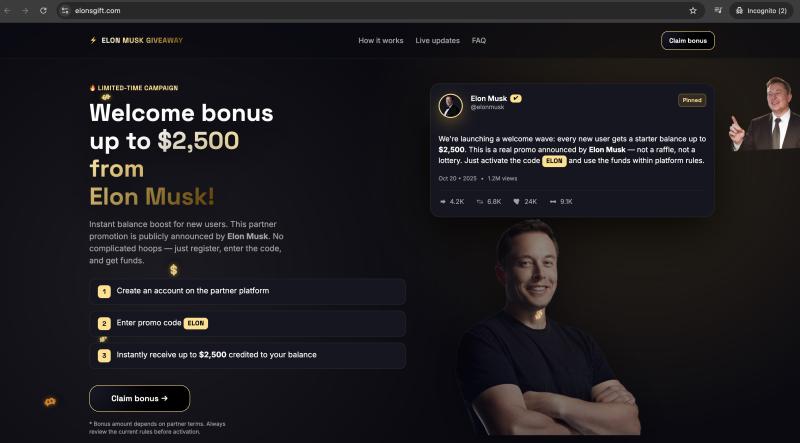
The internet is flooded with websites claiming to host “Elon Musk Giveaways,” promising free cryptocurrency, cash rewards, or high value prizes. Platforms such as Elonsgift.com, Elonxprize.com, etc. appear tempting, especially with flashy graphics and celebrity endorsements. But are these sites genuine, or are they just another way for scammers to steal your money and personal information?
The truth is alarming: most of these websites are untrustworthy. Scammers exploit Elon Musk’s global fame to make their scams look convincing. Users who fall for these tactics often lose cryptocurrency or sensitive personal data without any chance of receiving the promised rewards.
Many of these platforms boldly claim that participants can receive a welcome bonus up to $2,500 from Elon Musk or even be part of a 5,000 BTC giveaway supposedly sponsored by Elon Musk. These promises are designed to grab attention and make users act quickly.
These websites often display flashy banners, fake testimonials, and countdown timers to create urgency. They push users to send cryptocurrency or enter personal information, claiming these steps are necessary to unlock rewards.
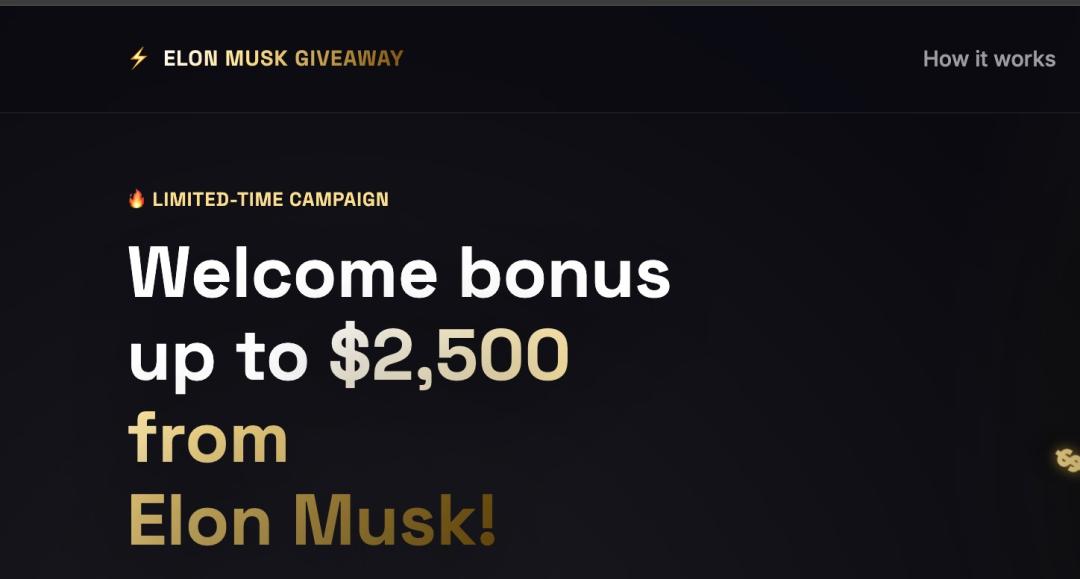

Some of the known “Elon Musk Giveaway” websites are:
These websites often share similar patterns such as cloned content, fake social proof, and unrealistic promises.
These scams typically operate in a predictable way, designed to lure in unsuspecting victims as:
They often advertise that Elon Musk or other well known figures are hosting giveaways. Social media platforms, fake YouTube videos, and fraudulent websites are used to make these offers appear legitimate.
Victims are asked to send Bitcoin, Ethereum, or other cryptocurrencies to “verify” their participation or unlock the reward. Once the payment is sent, scammers vanish, and the promised rewards never arrive.
They often request personal details, including email addresses, phone numbers, and sometimes even banking details. This information can later be sold on the dark web or used for identity theft.
Some these websites encourage users to invite friends or enter promo codes to “increase winnings/earnings”. These strategies spread them further while making it seem interactive and trustworthy.
Before engaging with any giveaway, watch for the following warning signs:
Unrealistic Rewards: Promises of huge cash or crypto returns for minimal effort are almost always false.
Cloned Content and Poor Design: Scam websites often copy content or use generic templates. The theme and design may look professional at first glance, but details are usually suspicious.
Suspicious Domains: These sites are often recently registered, lack a secure HTTPS certificate, or have no verifiable contact details.
Urgency and Pressure Tactics: Scammers push users to act immediately, creating a false sense of scarcity or opportunity.
Recognizing these red flags early can prevent you from losing money or sensitive information.
Here are practical tips to stay safe online:
Legitimate giveaways, contests, or promotions do not require any payment upfront. If a site asks for money or cryptocurrency to claim a reward, it is a major red flag and should be avoided immediately.
Before participating, check the site against official sources, reviews, or trusted scam reporting platforms. Look for clear ownership details, contact information, and user feedback to determine if the platform is trustworthy.
Never provide bank account details, passwords, social security numbers, or identification documents. Genuine giveaways rarely need personal or financial information beyond basic contact info like an email address.
Scammers often create fake social media accounts to promote “giveaways” and appear credible. Check the authenticity of the profile, look for verified accounts, and watch out for accounts with very few followers or low engagement.
Reporting unusual or suspicious websites can help protect other users and alert authorities to potential fraudulent activity. Use platforms like consumer complaint boards, anti-fraud websites, or browser safety reporting tools.
Look for HTTPS encryption, valid security certificates, and browser warnings about untrusted sites. A secure connection doesn’t guarantee legitimacy but is a basic indicator of safety.
Be cautious if a website promises extremely high rewards for minimal effort. If it sounds too good to be true, it probably is.
Use updated antivirus software, browsers, and device security settings to help prevent malware or phishing attempts from fraudulent websites.
Scammers exploit human psychology. They combine the credibility of Elon Musk’s brand with fear of missing out (FOMO), social proof, and excitement over “easy money.” The result is highly convincing, even for experienced users.
Another reason these scams persist is the lack of regulation in cryptocurrency transactions. Once crypto is sent, it’s nearly impossible to recover, making these schemes highly profitable for fraudsters.
While the idea of free cash or crypto can seem very appealing, Elon Musk Giveaway sites often use misleading tactics to attract users. These platforms frequently encourage people to share personal information, enter sensitive details, or even send money under the pretense of receiving rewards. In addition, they rely on users to spread the links further, amplifying their reach. Because of these practices, interacting with such sites can put your personal data, finances, and online security at risk, so it’s important to approach them with caution and awareness.
The safest approach is simple, stay informed, verify every offer, and never send money to claim a reward. By following these steps, you can enjoy the internet safely without falling victim to fraudulent schemes.
Disclaimer: This article has been written by a Scam Fighter Contributor. If you believe the article above contains inaccuracies or needs to include relevant information, please contact ScamAdviser.com using this form.
