
EN
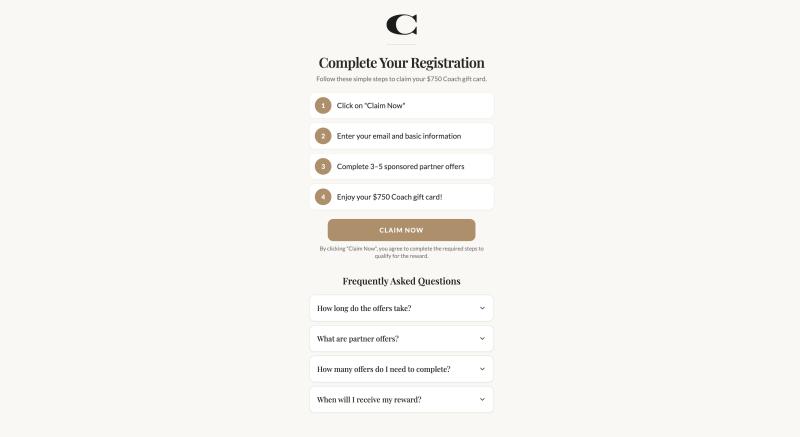
Gift card giveaways are extremely popular on social media, especially when they promise luxury brands and high values. Recently, many users have come across ads and posts claiming they can receive a $750 Coach Gift Card through websites like Chgifted.com. These offers often appear on platforms such as Facebook, Instagram, and TikTok, or through messages and are designed to look exciting and time limited.
At first glance, the offer sounds tempting. Coach is a well known brand, and $750 is a good amount. However, offers like these deserve careful attention before engaging. Below, we break down how these promotions work, what red flags to watch for, and how to protect yourself.
The $750 Coach Gift Card promotion usually appears as a sponsored post or shared link claiming you can win or receive a gift card simply by completing a few steps. These steps may include answering survey questions, confirming personal details, or clicking through multiple pages.
Websites like Chgifted.com present themselves as promotional or giveaway platforms. They often suggest the gift card is part of a limited time campaign and encourage users to act quickly before spots run out.
While the layout may look professional, the promise of a high value gift card with minimal effort should immediately raise questions.
These offers usually follow a familiar pattern seen in many online gift card schemes:
Despite completing these steps, users typically never receive the promised gift card. Instead, their data may be shared with third parties, or they may be signed up for recurring charges without realizing it.
The success of these promotions relies on psychology. A $750 reward feels significant, especially when attached to a recognizable brand like Coach. Scammers know that luxury names create trust and excitement.
Additionally, social media platforms make these offers appear more credible. Seeing similar posts shared repeatedly can make them seem legitimate, even when they are not.
Another key tactic is urgency. Phrases like “only 100 gift cards left” or “offer expires today” push people to act before thinking carefully.
There are several strong indicators that a $750 Coach Gift Card offer is not genuine:
Large brands do not run promotions this way, especially not through random survey sites.
Legitimate Coach promotions and sweepstakes follow clear and transparent rules. When Coach runs official campaigns, they are announced directly on the company’s official website or through verified social media accounts.
Authentic promotions clearly explain eligibility, terms, and timelines. They do not require users to provide sensitive personal information through random survey pages, nor do they ask for payment to receive a reward. If an offer does not originate from official Coach channels, it should be treated with caution.
If you have already clicked on a $750 Coach Gift Card ad or entered information on a site following through that ad, it is important to act quickly, such as:
The best defense against gift card scams is awareness. Always remember that free, high value rewards come with strict rules when they are legitimate.
Avoid clicking on ads that promise large gift cards for minimal effort. Never enter personal information on unfamiliar websites, and do not trust countdown timers or pressure tactics.
Before participating in any promotion, ask a simple question: does this offer come directly from the brand’s official website or verified channels? If the answer is no, it is best to stay away.
To help users stay cautious online, third party review platforms analyze websites and assign trust ratings. De-Reviews.com has reviewed Chgifted.com and given it a TrustScore of 19% out of 100%, which suggests a high level of risk. Reviewing such ratings before interacting with online offers can help prevent wasted effort, financial setbacks, or potential identity misuse.
The $750 Coach Gift Card offers circulating online, especially through third party sites like Chgifted.com, follow patterns commonly associated with phishing and data harvesting schemes. While the branding and messaging may look convincing, the structure of these promotions raises serious concerns.
Staying informed, verifying sources, and resisting pressure are key to staying safe online. When it comes to gift cards, if an offer sounds too good to be true, it usually is.
Disclaimer: This article has been written by a Scam Fighter Contributor. If you believe the article above contains inaccuracies or needs to include relevant information, please contact ScamAdviser.com using this form.
